
The Homecoming
This is the way the war ends. Maybe.

As the piece below suggests, I’m a natural pessimist. But there are moments of pure joy, sacred moments even for a militant atheist. A week ago we had such a moment. This reflection was first published in The Weekend Australian.
**
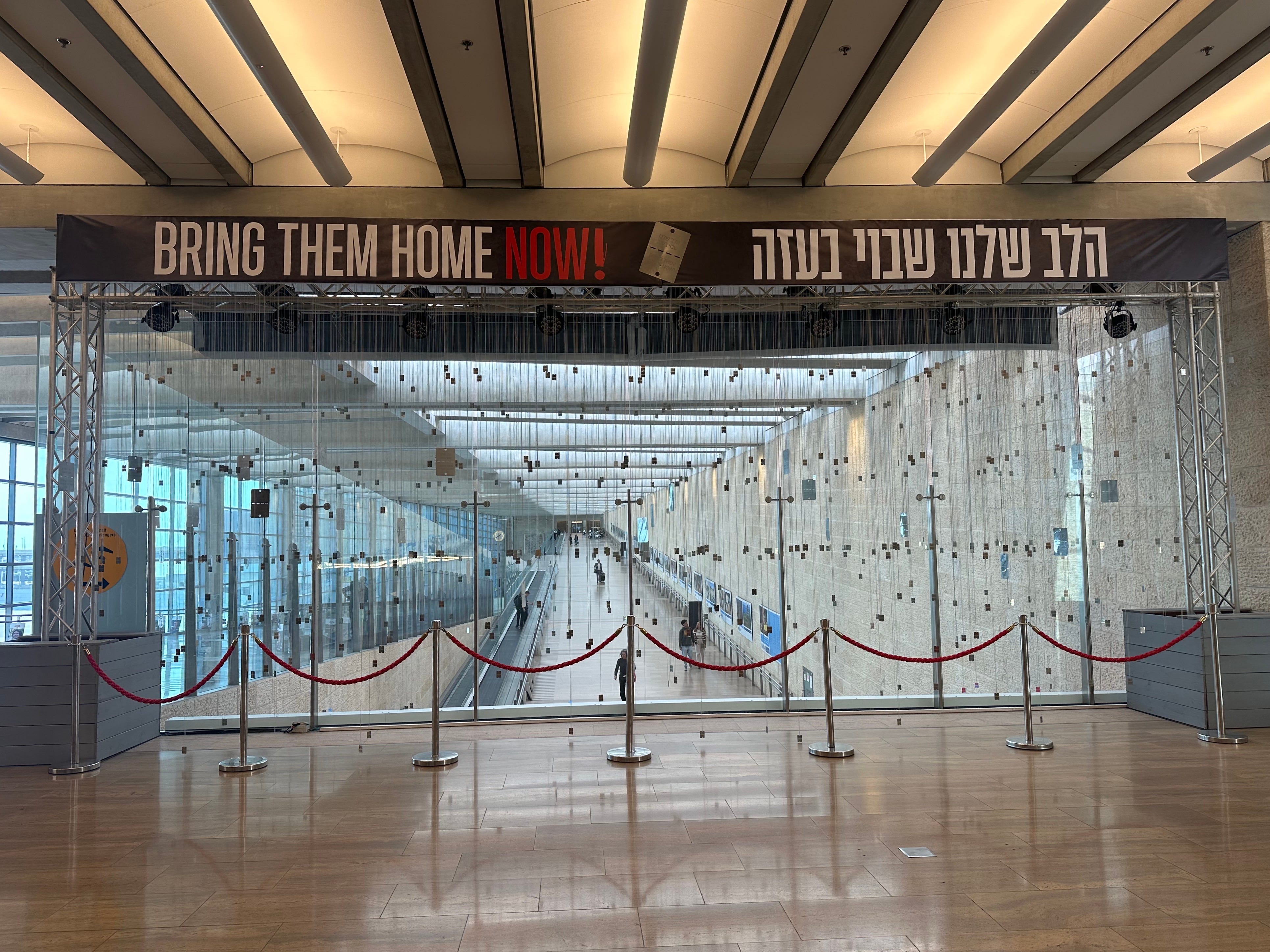
As anyone who has travelled to Israel during the past two years will know, from the moment you set foot in Ben Gurion airport, the hostages were there. In the arrivals terminal a banner screamed “Bring Them Home”. Behind the banner was an eerie installation of hundreds of dog tags hanging as if suspended in the air.
On the ramp to passport control on either side were photographs of hostages, their names and ages. At passport control each of the biometric scanners defaulted to an image of a hostage as if this absent person who could not come home was your official shadow during your stay.
Images of the hostages covered every inch of every wall, they were on bags, mugs and T-shirts. In a village in the north the flower bed on a traffic island spelled the name of an absent resident.
The hostages were the soundtrack to daily life; a persistent howl of pain, a drumbeat of rage against Hamas, the Netanyahu government and a basically indifferent world.
In March 2024 I was part of a media group that met three hostage families in Jerusalem. The missing were Doron Steinbrecher, Karina Ariev and Guy Gilboa-Dalal. The first two – women – were released in January. Gilboa-Dalal was among the last 20 hostages freed last week.
Back then we met his brother, Gal. He wore a T-shirt with his brother’s image on it. They were both at the Nova festival, travelling in separate cars. Only a few moments separated the fate of one from the other. Gal shared some details about his brother – to humanise him, obviously. His brother was interested in travelling to Japan, he’s a gentle soul, things like that. Forgettable details. Most people are forgettable at 22 when life has yet to shape them.
It was unbearable. The families pleading with us to tell their stories, to broadcast the names of the stolen. Their vulnerability was unbearable. The room was heavy with a dread that could not be named. I tried but could not hold back tears.
And while I wasn’t the only journo who cried that afternoon, I felt ashamed that I let myself cry, and had the privilege of crying, when these shattered families had to hold it together so they could tell us about the unfathomable absence that consumed their lives.
But last week as I watched Guy reunite with his family, watched him in a bear hug with Gal, his father thanking God, his mother sobbing and shrieking, “Guy is here!” “Guy is here!”, I could finally cry with a clear conscience.
The return of the last 20 hostages is the stuff of modern-day miracle. These men delivered home from the pits of hell into the everlasting embrace of their loved ones, their tireless advocates for a nightmarish 738 days. Those clips of the family reunions that over and over make the heart leap.
I tried imagining how I would respond if it were my father, son, brother, husband coming home. Would I be the bounce up and down while squealing type? Would I recite something meaningful? Break down in relief and gratitude?
In the digital age it’s taken for granted that we observe strangers in the most intimate, defining moment of their lives. We’re invited to put ourselves in the frame.
The reunions took place under bright hospital lights in utilitarian rooms but they had a mystical quality, like events unfolding outside historical time and place. Because as much as this is a uniquely Israeli story, it is also a universal one. Primal.
When at the start of August a Hamas propaganda video showed an emaciated Evyatar David in a tunnel digging his own grave, warning “time is running out”, I believed him. Time was going to run out for the last of the people taken on October 7, I thought.
Of course, I did what I could. I wrote about the moral travesty of the hostages in the dungeons of Gaza, out of sight and only peripherally in the mind of what in a previous era we’d reverentially call “the international community”. (We’ll see whether “the international community”, the forever emoting Starmers and Macrons and Albaneses, the UN agencies, the process-obsessed foreign policy elites, deliver anything concrete and sustainable for ordinary Gazans in the “Palestine” they have impotently championed.)
But I believed it was hopeless. Hostages were Hamas’s only leverage over Israel; they were always going to hold on to some, surely? Or one. Even one hostage is enough to drive Israel out of its mind, forcing it to grapple with moral equations that have a biblical echo. Do you spare a wicked city to save one righteous person? Do you raze a city – as the Israel Defence Forces was planning in Gaza – to secure the release of 20 living people?
Israel, as we know, in 2011 traded one captive, Gilad Shalit, for 1027 Palestinian prisoners, many of them convicted murderers, one of them, Yahya Sinwar, the future architect of October 7.
Israel has now traded for 20 living men (and 28 corpses, if they could only find them) for almost 2000 Palestinian prisoners, including hundreds serving life sentences. A Palestinian Islamic Jihad commander responsible for orchestrating three deadly suicide bombings during the second intifada. A Palestinian police officer who joined in the lynching of two reservists – the atrocity in which the killers triumphantly held up their bloodied hands, a gesture that has become a symbol that the radical chic Hollywood glitterati wear pinned to their chests.
And still, the question is not what these terrorists have done but what they may yet do. How many people they may kill at some future time.
But Israel was never going to reject these rotten deals because it’s a fiercely collectivist society with an “all for one and one for all” ethos, because the Jewish people came to the rational conclusion that no one else could be relied on to be for them.
And when on October 7, 2023, the state failed in its primary mission of keeping Israelis safe and civilians were kidnapped in their pyjamas and at a music festival, the state was always going to come under immense pressure to make it right. And because the idea of an absent loved one, the empty seat at the table, stirs something dark in the Jewish psyche.
The bereaved from October 7, in Israel and in Gaza, will have empty seats forever.
The newly liberated Elkana Bohbot said he spent most of his captivity chained in tunnels, where he lost all sense of space and time, except for his wedding anniversary. On his wedding anniversary he pestered his Hamas guard to let him shower. Hearing his account reminded me of my father. He said he kept himself sane in the death camps by keeping track of the dates, of the passing of time.
I’ve been a Zionist from the time I was in utero but I’d make a lousy Israeli. Hope is the country’s national anthem, while I’m a natural pessimist. For a nation that returned after 2000 years to its spiritual homeland, resurrected a biblical language into a modern tongue, made the desert bloom, assassinated Hamas’s political leader Ismail Haniyeh in a guesthouse in Tehran and so on, they are used to manifesting almost anything through sheer force of will. Even, with a little help from Donald Trump and his gifted team of shonky real estate developers, bringing David home from almost beyond the grave.
The universal story, of the hostage and the journey home through the underworld, is as old as Homer, who has had a good run this week.
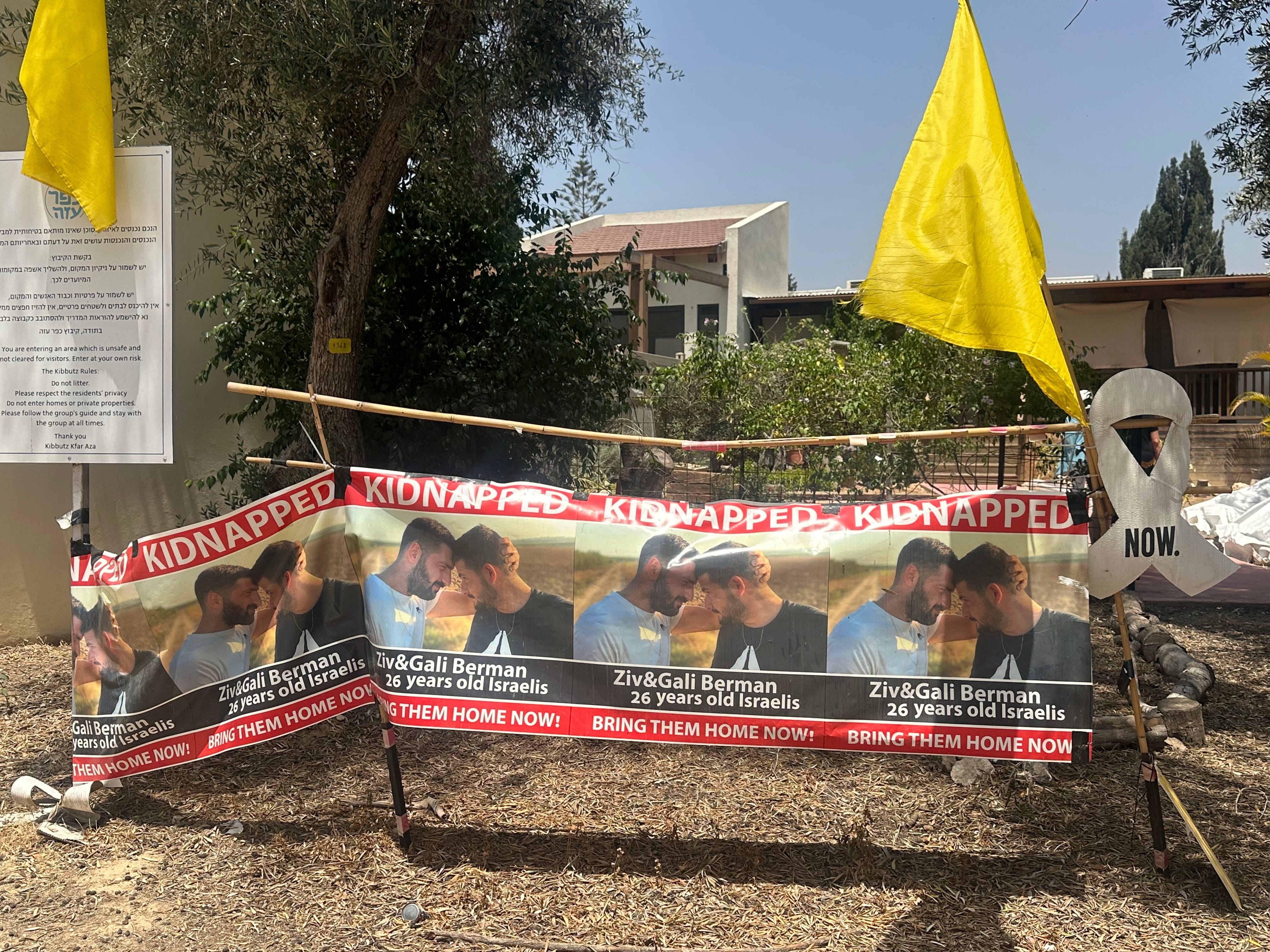
The names are Israeli, the stories are archetypal. Twin brothers Ziv and Gali Berman – their homes back in Kibbutz Kfar Aza have been preserved as a sacred protest site – were held for two years near one another in the same city but they did not know about the other’s fate. Now they are together once more.
The young lovers, Avinatan Or and Noa Argamani, the wrenching moment of their separation has since become iconic – her on the motorcycle, arms outstretched, pleading in terror – back in one another’s arms. Omri Miran is every returned father in history, playing tentatively with the daughters he barely knows, and they have had to learn the word daddy.
Five years ago, Tal Kuperstein suffered a catastrophic stroke. While his son Bar was in captivity the father taught himself to walk again. Taught himself to talk again so he could advocate for his son’s freedom – so the story, more like a fable, goes. This week the older man rose from his wheelchair to greet his son, threw his arms around him and broke into a high-pitched sob. A cry for the ages. Two miracles, two rebirths: the father and the son.
What does the day after bring for these traumatised people suddenly thrust into freedom and daylight? I’m not qualified to answer. But I’m compelled to speak of Serbian-Israeli Alon Ohel, a talented pianist. I know someone who knows someone who is related to him – such is the global Jewish family – so I played music from one of his performances over dinner recently at Jewish New Year. He returned blinded in one eye.
According to reports he has already played the piano in hospital. Even with half his world in shadow, he played. His fellow captives had told the media that even as Ohel was shackled underground he kept his spirits up by tapping an imaginary piano with his fingers. Well, that’s lifted the bar for every nagging mother: “If Alon could practise his scales in the dungeons of Gaza you have no excuses, kid.”
I have a relative in Israel, she’s devout. We’re close. We argue constantly about the Old Testament God in whom she invests her trust. I’m not talking sophisticated theological arguments: more the juvenile kind.
I accuse her of cherrypicking the events she attributes to him: it is his hand at work when terror attacks are foiled or Iranian missiles fall wide of their intended mark, but when unspeakable atrocities happen then we are too small-minded to understand, the Lord works in mysterious ways and so on. This week she sent me a video of soldiers with Israeli flags guarding the boom gates from Gaza on the day of the hostages’ release and her message had a prayer about the righteous passing through the gates and this being the day that God “has made a revelation and we will rejoice in it”.
And on this occasion I let her have the win. It’s impossible not to rejoice, not to feel lighter.
The rupture that started on October 7 is not healed. I’ve reconciled to the bitter reality that I’ll never be getting October 6 back. Jew-hatred is normalised on our streets. At writers festivals and in university lecture halls, the Jewish state will continued to be demonised as a singular evil.
Still, this week I drew a line of sorts under the past two years. Because, to mangle an activist slogan from my opponents, until the hostages were free I wasn’t free, or at least I didn’t feel free. From now on, when I’m at my lowest, I’ll think of Ohel playing his secret music in the dark, a prisoner and yet the very essence of freedom.
A wonderful piece Julie. I share in your joy for the returned, but my own natural pessimism cannot believe that we will not see something like October 7 (or worse) occur again, and again, unless or until fundamentalist Islam goes the way of the Christian Inquisitors.
I also grieve for those who did not survive October 7 or the perils of Gaza and the Hamas tunnels afterwards. The Arabs who call themselves Palestinians (whatever that means) will forever have blood on their hands that nothing can ever wash off. I'm not Jewish, or even religious, but if there is a God, I hope he sends those responsible to the hell they deserve. Some things can never be forgotten.
You are a beacon of light Julie, keep shining in the darkness 🙌